Layering Classics

Why Cashmere works well with Tailoring
1. Exceptional Warmth Without Weight
Cashmere fibres are incredibly fine, meaning they trap heat efficiently without adding bulk. This makes cashmere the perfect companion for suiting, allowing you to stay warm while maintaining the clean lines of a tailored silhouette.
2. Softness That Elevates Every Layer
Cashmere’s softness sits comfortably against the skin, making it ideal for base layers that feel luxurious beneath a jacket or coat.
3. A Refined Aesthetic
Whether you choose a classic crew neck, a sleek roll neck, or a fitted cardigan, cashmere adds visual richness and subtle texture that enhances suiting fabrics.
The Layering Process:
1. Start with the Foundations: The Perfect Shirt 

Every great layered look begins with structure. A well-fitted shirt, precise in cut, balanced at the collar, and immaculate in fabric, is the base upon which the rest of your outfit sits. Whether crisp poplin or soft brushed cotton, the shirt should support the garments above it without pulling or bunching.
2. Add Texture with Lightweight Knitwear
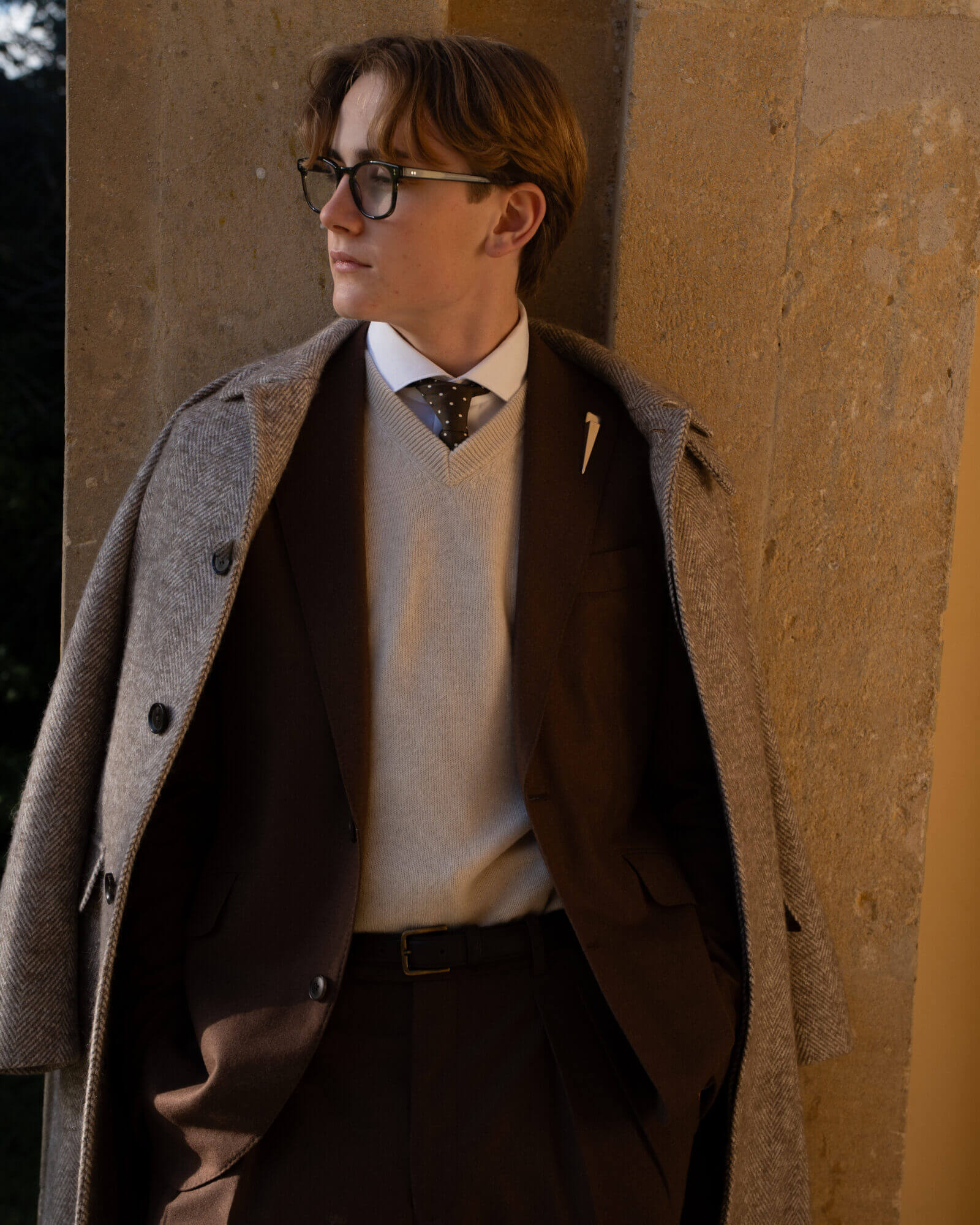
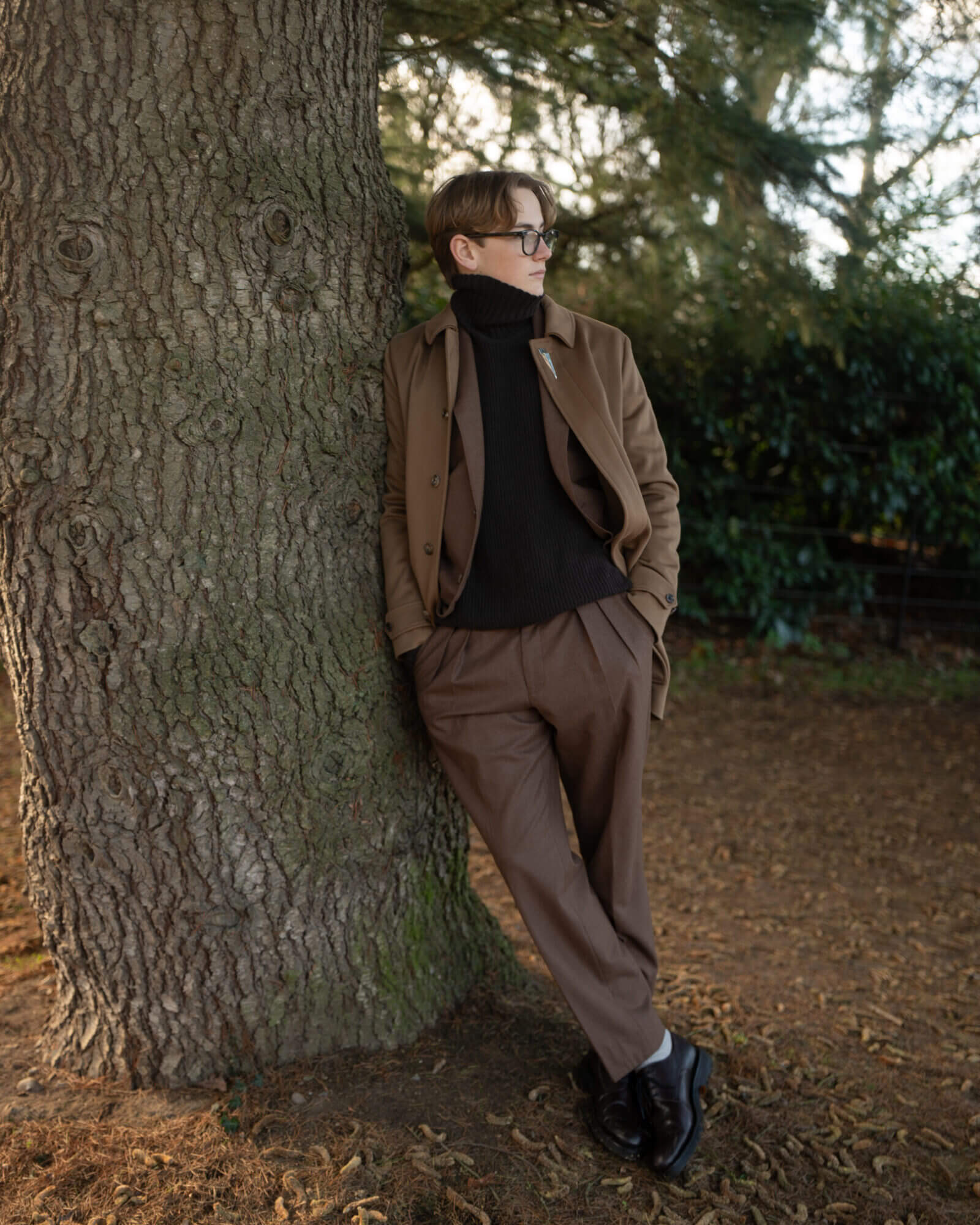
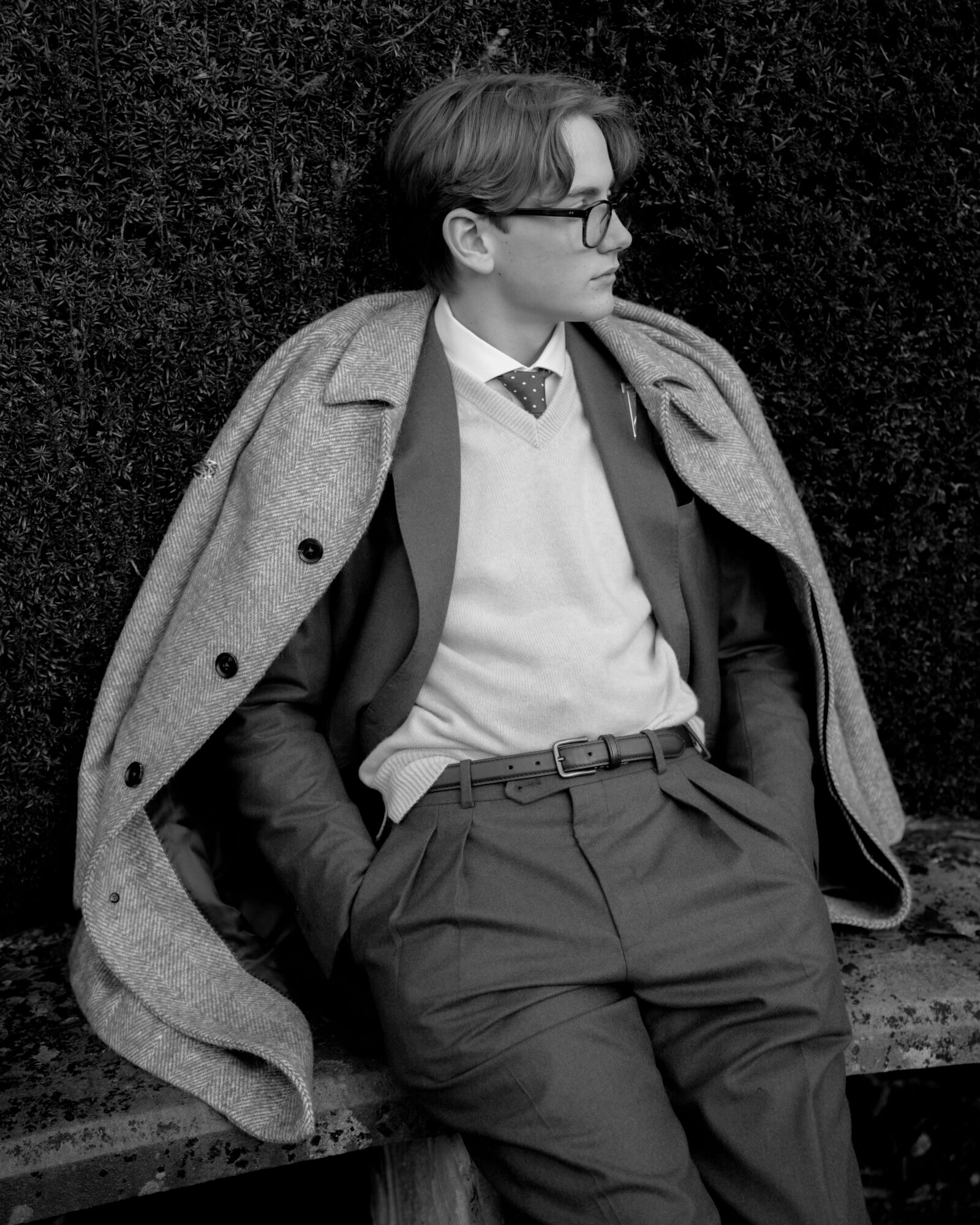
Fine-gauge knitwear brings warmth and texture without disrupting a clean line. A merino crew neck offers effortless refinement beneath a blazer, while a silk-cashmere roll neck adds understated luxury. The key is weight: choose knits that slip under tailoring without adding bulk, allowing the jacket to maintain its intended shape.
3. The Tailored Jacket: Structure with Personality
The jacket is the hero of any layered ensemble. The right piece brings sharpness, proportion, and presence. Consider how shoulders, lapels, and cloth work in conversation with your base layers:
-
Soft shoulders complement relaxed knitwear.
-
Structured tailoring pairs beautifully with crisp shirting.
-
Textured fabrics—flannel, tweed, hopsack—add depth and visual interest.
A tailored jacket should anchor the look while still allowing flexibility in styling.
4. Outerwear
The final layer should reinforce the sophistication built beneath it. Look for coats cut to accommodate tailoring:
-
A tailored overcoat in cashmere or wool elevates everyday dressing.
-
A structured field jacket or car coat introduces a modern utilitarian edge.
5. Comfort Without Sacrificing Craft
Layering should feel as good as it looks. Breathable natural fibres; wool, cotton, cashmere, linen—help regulate temperature while maintaining structure. When layering is done well, each garment contributes to comfort, mobility, and refinement.
Frequent Questions:
Can you layer knitwear under a tailored suit without ruining the silhouette?
Absolutely, when done correctly. The key is choosing fine-gauge knitwear, such as lightweight cashmere, which adds warmth without bulk. High-quality cashmere sits smoothly beneath structured cloth, preserving the clean, sharp lines of a well-fitted jacket.
What coat works best over layered tailoring?
A well-cut overcoat, preferably in a wool–cashmere blend, complements layered tailoring perfectly. Its clean lines and natural drape allow it to sit comfortably over both a suit and your inner knitwear, ensuring warmth without bulk.
How do I avoid overheating when layering?
Choose breathable natural fibres: fine cashmere, merino wool, and premium cotton. These regulate temperature effectively, keeping you warm outdoors and comfortable indoors. The goal is intelligent layering, not over-layering.
How do I choose colours when layering under a suit?
Start with neutrals for versatility: charcoal, navy, camel, stone, or black. These pair effortlessly with most tailoring. For a refined statement, introduce seasonal tones like burgundy, forest green, or deep chocolate that complement winter suiting fabrics.
What’s the best way to care for cashmere used as a layering piece?
Allow your cashmere to rest between wears, fold it rather than hang it, and use a gentle wool wash or professional cleaning when needed. Proper care keeps the fibres smooth, prevents pilling, and maintains the elegance of your layered outfits.