Music and Tailoring a tribute to Anthony Price

A Tribute
With the sad passing of Anthony Price we thought we’d give thanks for all the things he brought to the world of tailoring and how he was able to meld the world of music to it forever. Antony Price serves as a natural point of departure for thinking about the enduring relationship between music and tailoring — a relationship that has shaped not only how clothes look, but how they feel, move, and communicate identity. At Clements and Church, we believe tailoring is never isolated from culture. It responds to it, absorbs it, and gives it form. Music, perhaps more than any other art, has consistently pushed tailoring forward.
Price understood this instinctively. His work did not exist in a vacuum of fashion seasons or trends; it was made for musicians, for performance, for moments of heightened expression. Dressing figures such as David Bowie and Roxy Music, he recognised that tailoring could act as an extension of sound — translating mood, rebellion, and elegance into silhouette. These were garments designed not just to be seen, but to be inhabited under lights, in motion, and under scrutiny.
The perfect inspiration for velvet is music and Anthony Price
It doesn't always have to be tailoring, think Kurt Cobain in a cardigan
The single-breasted jacket created for Bowie and worn during the Serious Moonlight tour remains a powerful example of this idea. Its clarity of line and control of proportion mirror the discipline beneath Bowie’s theatricality. In the same way that music relies on structure — rhythm, tempo, repetition — tailoring depends on pattern, balance, and restraint. It is within those constraints that expression becomes possible. Price’s jackets carried authority without stiffness, drama without excess.
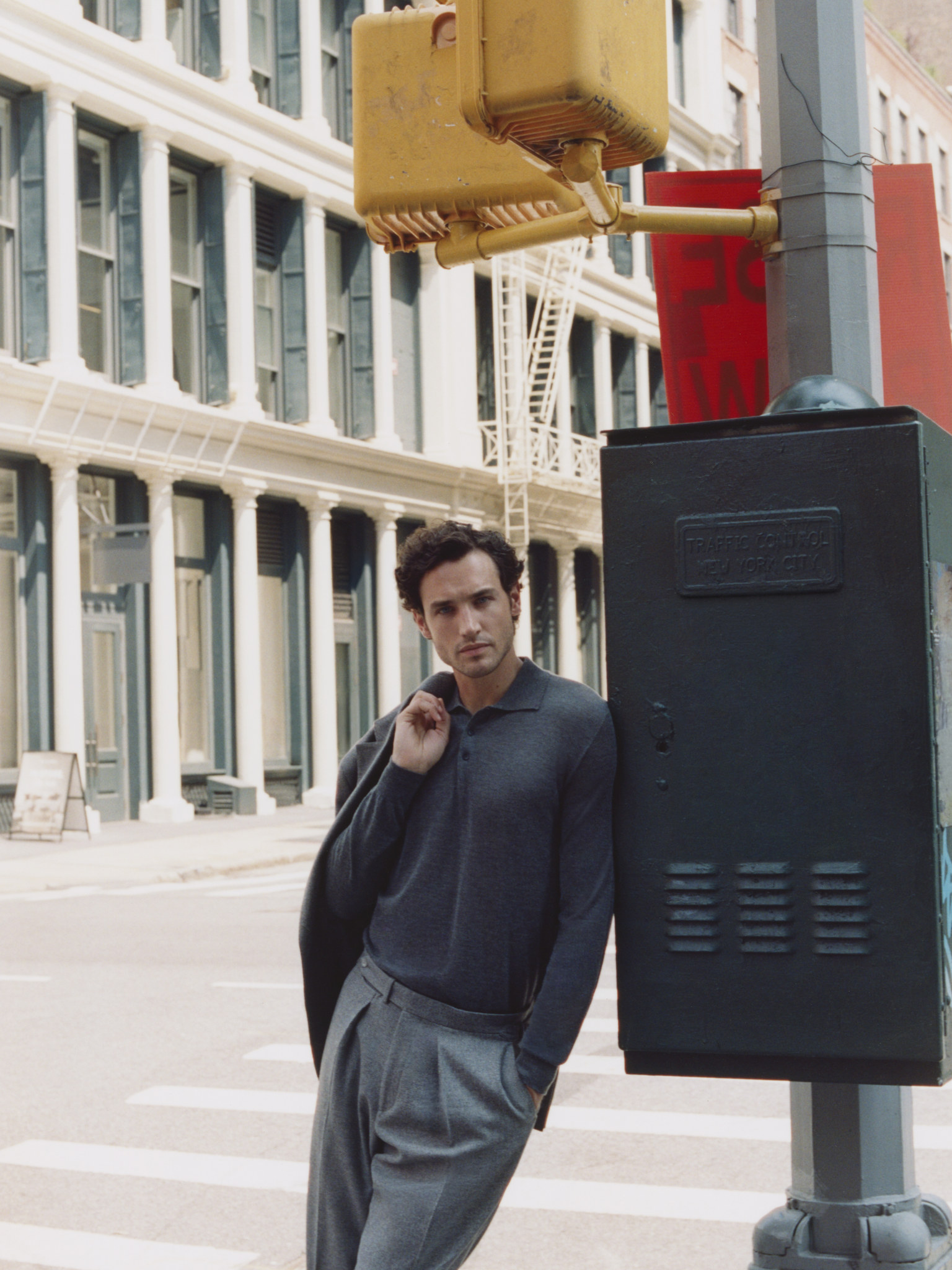
Earlier in his career, Price reinterpreted military and civilian uniforms, transforming symbols of discipline into garments charged with glamour and tension. This approach closely parallels the way musicians have historically borrowed from uniform and tradition — from stage suits to ceremonial dress — only to reframe them as tools of self-definition. The sharp shoulders, elongated lines, and sculpted torsos of Price’s work echoed the confidence and confrontation present in the music of the time. We have strived for that sharp look in our recent shoots and have tried to capture that vibe of rock and roll elegance.
For us, this dialogue between tailoring and music is not historical — it is ongoing. From jazz musicians in softly constructed suits, to rock performers using tailoring as armour, to contemporary artists who rely on clothes to complete their visual identity, music has always demanded more from tailoring. It asks garments to perform, to endure, and to project character. A well-cut suit, like a well-written song, carries its own rhythm. The way a sleeve breaks, the way cloth moves across the back, the way a jacket settles on the shoulder — these are moments of quiet choreography. Remember though it's not all about the sharp looks more relaxed tailoring and knits fit brilliantly into this world. Think Jazz icons off stage and Kurt Cobain on and off the stage inspiration is everywhere take a leaf out of Anthony's book and start with military inspo as well perfect for the season.
Sharp tailoring 

Sharp tailoring requires precision, Antony Price’s training at the Royal College of Art and his meticulous approach to construction underline something we hold central at Clements and Church: craftsmanship is the foundation of expression. The most compelling clothes are not loud by accident; they are precise by design. Music stars understood this in Price’s work because it gave them clarity. It allowed personality to come forward without distraction.
Relaxed looks
Musicians have also long embraced more relaxed forms of tailoring, favouring ease, softness, and movement over formality. From jazz players in unstructured jackets to singer-songwriters in softly cut trousers and open-neck shirts, these looks prioritise comfort without abandoning intention. Relaxed tailoring allows clothes to move with the body, to crease, to settle — becoming personal over time. At Clements and Church, this approach speaks to a quieter kind of confidence: garments designed to support creativity rather than dominate it. Just as music can be stripped back and intimate, tailoring too can be understated, relying on proportion, cloth, and feel rather than spectacle.